In today’s world we often feel trapped between rising prices, political promises, and global conflicts. Wars happening far away suddenly affect our daily lives through rising fuel prices, inflation, and uncertainty. Even the simple act of cooking food becomes dependent on international markets and government policies.
But our ancestors in Odisha lived differently.
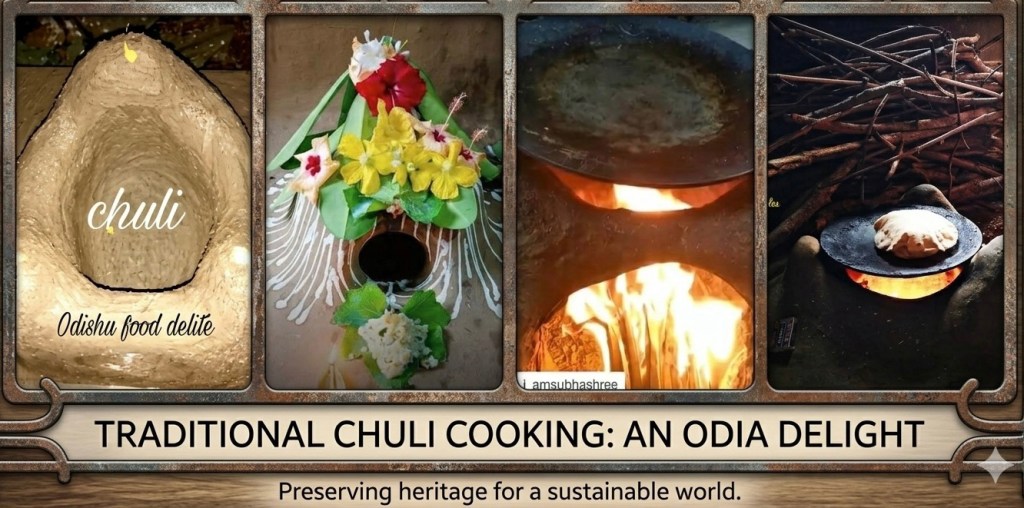
For centuries, households relied on the chuli, the traditional earthen stove. It was simple, natural, and deeply connected with the rhythm of nature. Firewood collected responsibly, dried leaves, and agricultural waste were used to cook nourishing food. Families gathered around the warm fire, sharing not only meals but also stories and traditions.
This was not just a method of cooking. It was a way of living in harmony with nature.
Today we depend heavily on LPG gas cylinders. When global wars or economic tensions occur, the prices rise suddenly. Ordinary families suffer the most. We realize how fragile our modern systems are.
The recent global tensions and rising fuel costs remind us of an important truth: self-reliance is strength.
Returning to the chuli does not mean rejecting modern life completely. It means remembering the wisdom of our ancestors and keeping a balance. It means valuing sustainable practices that kept humanity alive for thousands of years.
Nature is our real protector.
If we plant trees, protect forests, and live closer to nature, we reduce our dependence on systems that often fail the common people. A tree provides oxygen, shade, wood, fruit, and life itself. When we plant a tree, we are not only helping ourselves but also future generations.
We must remember: Humanity survives because of nature, not because of politics.
Many policies promise solutions, but the real power still lies in our hands. By returning to sustainable habits, supporting local traditions, and respecting the earth, we can create a healthier and more independent society.
It is not too late.
Let us not live in fear of rising prices or distant wars. Instead, let us revive the wisdom that has sustained our land for centuries.
Let us return to the old and gold path a path where nature, humanity, and tradition walk together.
Light the chuli. Plant a tree. Protect Mother Earth.
जीवन में गुरु की आवश्यकता हर किसी को होती है। यह एक शाश्वत सत्य है कि बिना गुरु के कोई भी व्यक्ति सत्पथ पर चलकर आत्मज्ञान या परम सत्य के आलोक को नहीं देख सकता।
गुरु केवल पथ प्रदर्शक नहीं होते वे स्वयं वह दीपक होते हैं, जिसकी रोशनी में साधक अपने भीतर के अंधकार को पहचानता है और उससे बाहर निकलने की यात्रा शुरू करता है।
आज के समाज में ‘ज्ञानी’ कहलाने की परिभाषा थोड़ी बदल गई है। ज्ञान का अर्थ अक्सर केवल तथ्यों और सूचनाओं का संग्रह मान लिया गया है। जो व्यक्ति उन्हें चतुराई से प्रस्तुत कर लेता है, उसे ही ‘ज्ञानी’ कहा जाता है।
पर क्या वास्तव में वह व्यक्ति ज्ञानी है? या वह केवल चतुर है?
गुरुपूर्णिमा के इस पावन अवसर पर आइए, इस भेद की थोड़ी खोज करें।
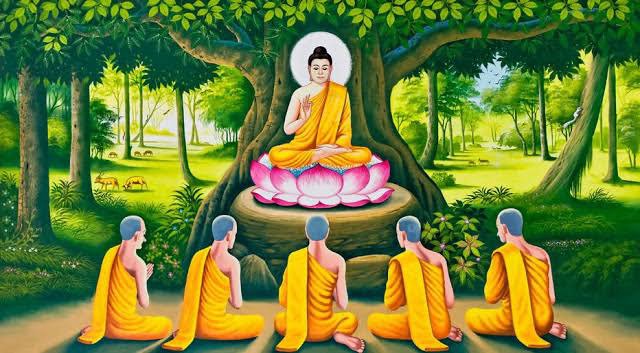
गुरुपूर्णिमा का दिन वही पुण्य तिथि है जब भगवान बुद्ध ने अपना प्रथम उपदेश धर्मचक्र प्रवर्तन पाँच शिष्यों को दिया था। यह केवल एक शिक्षण घटना नहीं थी, बल्कि आत्मज्ञान की एक वैश्विक धारा की शुरुआत थी।
बुद्ध की एक कथा है, वे एक मुनि से बहती नदी के किनारे संवाद करते हैं।
बुद्ध पूछते हैं, “यदि कोई इस नदी के दूसरे किनारे जाना चाहे तो क्या करेगा?”
मुनि उत्तर देते हैं, “यदि जल कम हो तो वह पैदल पार कर सकता है; यदि गहरा हो, तो नाव का सहारा लेगा; और यदि तैरना आता हो तो स्वयं तैर सकता है।”
बुद्ध फिर प्रश्न करते हैं, “यदि वह न चलना चाहे, न तैरना, न नाव लेना, और यह कहे कि ‘नदी का दूसरा किनारा स्वयं चलकर मेरे पास आ जाए’ तो आप क्या कहेंगे?”
मुनि उत्तर देते हैं, “ऐसे व्यक्ति को हम मूर्ख ही कहेंगे।”
बुद्ध समझाते हैं, “जो व्यक्ति स्वयं के अज्ञान और भ्रांति को दूर नहीं करता, वह भी उसी प्रकार मुक्ति के दूसरे छोर तक नहीं पहुँच सकता। चाहे वह पूजा करे, अनुष्ठान करे, व्रत रखे या नैतिक जीवन जिए वह केवल भ्रम के साथ उसी किनारे पर खड़ा रहेगा।”
गुरु का कार्य: दिशा देना, नाव नहीं बनाना
मनुष्य को यह दुर्लभ जीवन परम सत्य की खोज के लिए मिला है। और इस सत्य तक पहुँचने के लिए गुरु की आवश्यकता अनिवार्य है। गुरु मार्ग दिखाते हैं, पर चलना तो स्वयं को ही होता है।
गुरु की दृष्टि में सभी शिष्य समान होते हैं वह न जाति देखता है, न पद, न धन, न विद्या।
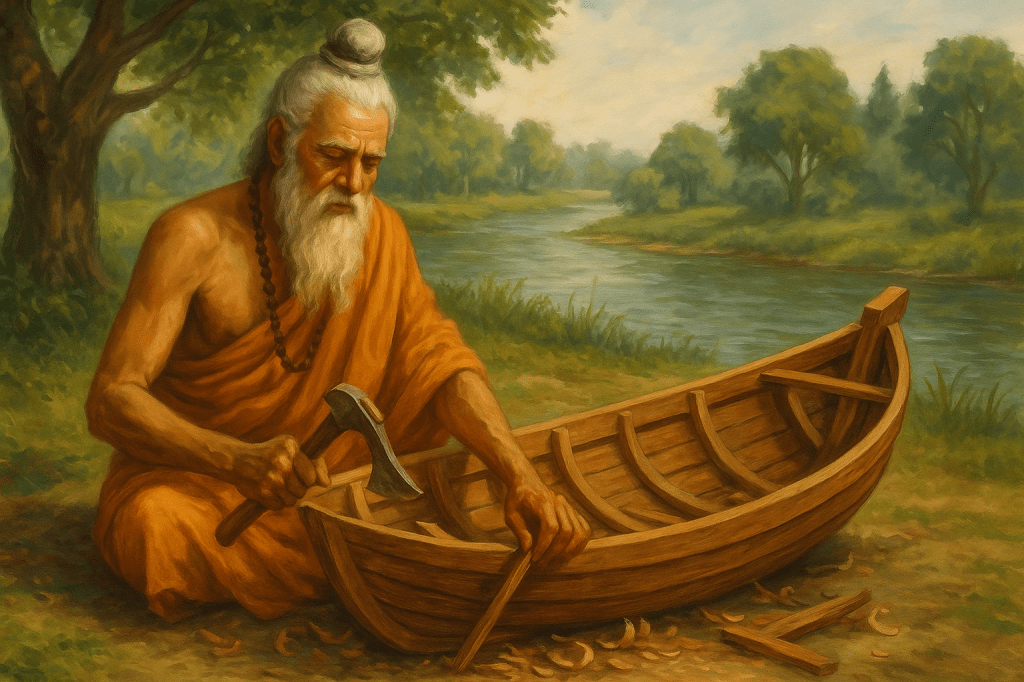
शिष्य को यह निर्णय स्वयं करना होता है कि वह उस मार्ग को कैसे पार करेगा किसी की बनाई नाव से या अपनी नाव बनाकर।यह निर्णय उसके प्रारब्ध, संकल्प, और कर्मों पर आधारित होता है।
कलाकार की दो यात्राएँ: परफ़ॉर्मर और गुरु
कलाकार दो प्रकार के हो सकते हैं, एक परफ़ॉर्मर, दूसरा गुरु।
दोनों एक ही गुरु से शिक्षा पाकर भी अलग-अलग दिशाओं में यात्रा करते हैं।
परफ़ॉर्मर अक्सर दूसरों की बनाई नाव में यात्रा करता है। उसे मंच, आयोजक, दर्शक, और प्रशंसा की आवश्यकता होती है।
वह भी किनारे तक पहुँच सकता है, पर उसका अनुभव मुख्यतः बाह्य होता है।
गुरु, अपनी नाव स्वयं बनाता है, स्वयं ही उसका नाविक बनता है।
वह अकेले उस गहरे जल को पार करता है, और जब पहुँचता है, तब दूसरों को भी मार्ग दिखाने लगता है, अपनी नाव से, अपने अनुभव से।
दोनों ही दूसरे किनारे तक पहुँच सकते हैं, लेकिन क्या दोनों की यात्रा की गहराई, भक्ति, त्याग और अनुभूति समान होती है?
क्या मुक्ति की अनुभूति सबके लिए एक जैसी होती है? यह प्रश्न आज भी हमारे भीतर उत्तर की प्रतीक्षा में है। गुरुपूर्णिमा के इस पावन अवसर पर आप सभी को मेरी ओर से हार्दिक शुभकामनाएँ। स्वस्थ रहें, साधना में रमें, और स्वयं अपना दीपक बनें।
Today’s younger generation is grappling with unprecedented levels of stress, largely due to the evolving education system, the burden of heavy coursework, and the competitive job market. Students, especially those in professional fields like engineering, face immense academic pressure, often leading to anxiety, depression, and in tragic cases, even suicide. The education system, which once aimed to nurture holistic development, has now become a race to secure higher grades and better career prospects.
In addition to academic stress, social media plays a significant role in influencing young minds. The constant exposure to unrealistic standards, comparison culture, and the pressure to keep up with digital trends create a sense of inadequacy and self-doubt among students. The lack of real social interactions further isolates them, making it difficult to cope with challenges and uncertainties in life.
The Growing Crisis: The Need for Mental Stability
The alarming rise in student suicides is a stark reminder of the emotional and psychological distress faced by the youth. Data from the National Crime Records Bureau (NCRB) shows a disturbing trend—student suicides in India have been increasing steadily over the years. Between 2011 and 2021, the number of student suicides rose from 6,654 to 13,089, reflecting an alarming annual growth rate of approximately 4%—which is nearly double the national average for suicides.
Although official figures for 2024 are yet to be released, early reports suggest that the trend continues to be a cause for grave concern. The rise in student suicides is not limited to engineering students but extends to all academic streams, indicating a deeper issue within the education system and society at large.
Many students, unable to find solutions to their problems, succumb to despair. The lack of coping mechanisms, combined with external pressures, makes it difficult for them to make sound decisions and navigate through life’s challenges. It is crucial to introduce practices that enhance concentration, emotional resilience, and self-awareness—qualities that can help students find clarity and inner peace.
Dhrupad: A Path to Stability and Mental Clarity
The very essence of “Dhruva” in Dhrupad signifies stability, continuity, and steadfastness. Unlike other forms of music, Dhrupad is deeply meditative in nature and aligns with the principles of Naad Yoga—the yoga of sound. Through its refined art form, Dhrupad guides the mind toward a state of deep concentration, allowing individuals to experience tranquility and a sense of inner balance.
By immersing oneself in the frequencies of Dhrupad, the scattered mind finds a focal point, leading to greater clarity and focus. This meditative process enables students to make better decisions, confront the truth, and develop resilience against external stressors. The vibrations of Dhrupad do not merely entertain; they transform the listener’s mental state, providing a pathway to self-awareness and emotional stability.
Dhrupad: A Music for Society, Not Just Individuals
Dhrupad is not an art form reserved for a select few. It is a profound musical tradition that belongs to society as a whole. Unlike mainstream music, which often serves as mere entertainment, Dhrupad is designed to elevate the consciousness of its listeners and practitioners. Anyone, regardless of background, can practice and experience its transformative effects. It is a musical discipline that nurtures patience, discipline, and deep listening—qualities that are essential for personal growth and societal well-being.
The Role of Dhrupad in Educational Institutions
Integrating Dhrupad into educational institutions—schools, colleges, and universities—can serve as a powerful tool to counteract the rising mental health crisis among students. Here’s how Dhrupad can benefit young minds:
1. Enhances Concentration and Focus
• The slow, deliberate pace of Dhrupad strengthens cognitive abilities and improves attention span, helping students concentrate better on their studies.
2. Reduces Stress and Anxiety
• The deep vibrations and meditative nature of Dhrupad calm the nervous system, reducing stress and promoting emotional well-being.
3. Aids in Decision-Making
• A focused mind is more capable of rational thinking. Through Dhrupad, students can develop the ability to make sound decisions, face challenges with clarity, and navigate life’s uncertainties.
4. Promotes Emotional Resilience
• By practicing Dhrupad, students learn to regulate their emotions, develop patience, and cultivate a sense of inner peace.
5. Encourages a Holistic Approach to Life
• Dhrupad is more than music—it is a way of life. It teaches students to embrace discipline, mindfulness, and a deeper connection with themselves and their surroundings.
The younger generation is in dire need of tools that can help them cope with the pressures of modern life. Dhrupad, with its meditative and transformative qualities, is an ideal medium to introduce in educational institutions. It is not just an ancient art form but a necessity in today’s fast-paced, stress-filled world. By integrating Dhrupad into schools, colleges, and universities, we can offer students a path to mental clarity, emotional resilience, and a more balanced approach to life.
At a time when student suicides are reaching alarming numbers, Dhrupad serves as a guiding light, helping them regain stability, find solutions, and embrace life with a renewed sense of purpose. It is time we recognize the power of this ancient tradition and make it an integral part of education for the well-being of future generations.
कर्म ऐसा है, जो सोने नहीं देता, जन्मों से जन्मों तक, मोक्ष होने नहीं देता। कर्म ऐसा है, जो रोने नहीं देता, सुख, समृद्धि, धन-मान, स्वयं से दूर जाने नहीं देता।
कर्म ऐसा है, जो कभी स्वयं से स्वयं को जुड़ने नहीं देता, कर्म ऐसा है, जो कभी संबंधों की डोरी को टूटने नहीं देता।
कर्म ऐसा है, जो भय और अनुताप से जीवन जीने नहीं देता, कर्म ऐसा है, जो सदाचारी को कुछ होने नहीं देता।
कर्म ऐसा है, जो सारथी की तरह प्रति क्षण संग चलता, निर्धन-धनवान, बड़े-छोटे, सबके लिए एक ही कहानी कहता।
Imagine giving a heart patient cancer medication, or prescribing stomach ache medicine for a dental patient! Would such an approach heal either person? We would call such a doctor ignorant, and perhaps the patient uneducated. This analogy highlights a simple truth: to heal a specific ailment, you need the appropriate treatment. Likewise, in music or any art form, an informed approach is essential. As a classical music teacher, I’ve observed this many times with my students how the knowledge I pass down from my gurus impacts them, and how they receive it. This article aims to explore this dynamic.
Just as a doctor diagnoses the problem before prescribing medication and outlines a time frame for healing, a guru assesses a student’s musical aptitude, maturity, and foundational knowledge. Based on this assessment, the guru designs the teaching process. A wise student follows the guru’s method, dedicating their energy to refining their skills. If a student is not inclined to discipline, the guru’s wisdom may not resonate with them. Much of this interaction depends on the student’s environment, atmosphere, and upbringing.
Let’s delve deeper into how this exchange works. Classical music is considered an auditory art, while dance is a visual one. Both require the practitioner to observe discipline. In auditory art, the discipline lies in knowing what to listen to and what to avoid. Similarly, in visual art, it’s about discerning what to watch and what not to. In today’s world, where screens mobile phones, in particular are everywhere, this distinction becomes crucial. Watching reels, for example, has become second nature to most people, but artists and students need to understand when it helps and when it doesn’t.
For an artist, the path of mastery involves renunciation and dedication. Most people live either in the past or the future, but an artist lives in the present and teaches society how to live in the moment. This is one of the greatest lessons of art: to fully experience and enjoy life, and to understand its meaning in real-time. Therefore, discipline is a necessary part of this journey. If one can adhere to it, they will rise above societal pressures and live a fulfilling, enriched life.
Returning to the analogy: just as a specific medicine is prescribed to cure an illness within a given time frame, in art, adhering to the time-tested guidance of a guru is crucial. As human beings, our thoughts and behaviors reflect what we constantly absorb. If we regularly engage with violent or disturbing content, it will manifest in our actions. In the same way, if we fill our minds with shallow or negative music, it will inevitably reflect in our own artistic expressions.
Recently, a friend of mine who resides abroad shared a story about his strict guru, who forbade him from listening to other artists during his training. Though it caused frustration initially, over time, he realized the value of this disciplined approach. Years later, he even wrote a popular book based on his guru’s teachings. In the past, such strictness was common, which is why the concept of “Gharana” (musical lineage) held so much importance. However, today, listening to Gharana-style singing seems like a distant dream because many have lost their sense of discipline. This is not the fault of students or teachers alone; societal changes have played a significant role.
Classical music, being an auditory art, is traditionally passed down through oral transmission what we call “Gurumukhi Vidya” (knowledge from the guru’s mouth). The purity of this form depends on faithfully following the guru’s instructions. Listening to other styles or traditions during the formative years of training may dilute the student’s own musical journey. The more one immerses in a particular tradition, the more assured their progress.
In Deva Vani Dhrupad Music tradition, there are five principles of discipline known as “Sadachaar” that guide the student toward maintaining musical purity and discovering their own unique expression. These principles are deeply embedded in the Deva Vani Dhrupad tradition, and following them ensures that a student upholds the integrity of their art while carving out a distinctive identity in today’s world.
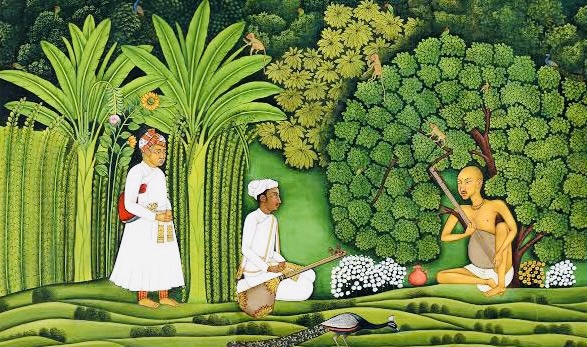
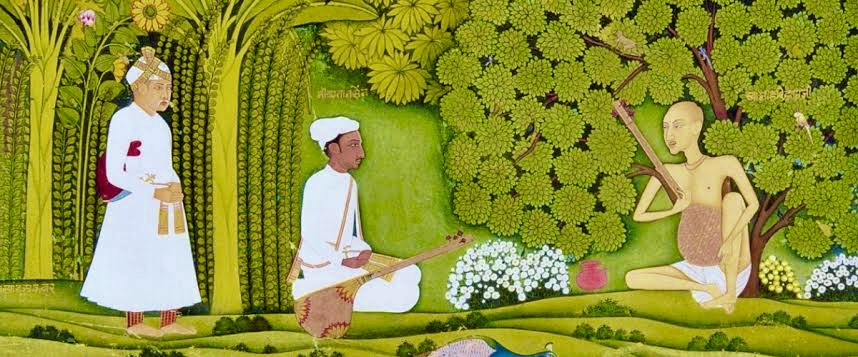
The famous name of Tansen is well-known in the Indian classical Dhrupad Music tradition. Many singers aspire to become like him. I remember, back in 2011, when I visited my late friend Devdatt’s home near Pune, his father an avid classical music enthusiast blessed me with valuable advice. He said, “Many are trying to prove themselves as Tansen, but you, my son, strive to be a ‘Kansen’ (one who listens). Focus on listening carefully to your guru and your own voice during practice. Always be mindful of what music you expose yourself to, for it will shape your musical journey.” His words had a lasting impact on me and helped me develop a distinct musical style of my own.
Over the years, many students have come to learn from me some for a short time, some for longer. My only hope is that they gain something valuable from their training, something that impacts their lives and brings stability to their journey. In conclusion, I’d like to emphasize that art can transform your life, but only if you distance yourself from the distractions of easily accessible entertainment and instead focus on the teachings of your guru. Only then can you truly understand the depth of art and discover its beauty.
In the realm of art, be it music, painting, or any form of creative expression, the distinction between the artist and the connoisseur is often blurred. The artist and the rasik (connoisseur) are not separate entities but interconnected souls in the same journey of experiencing beauty. When we begin to categorize art or artists by levels, we diminish the infinite nature of the art itself. These “levels” are merely manifestations of ego, and ego, in any form, acts as the corrosion that destroys both the artist and the art.
Consider this: no external force can destroy iron; it is the rust that forms within that leads to its decay. Similarly, it is not external criticism or challenges that damage the artist; it is the internal ego that erodes their art from within. An artist who proclaims that swar (the musical note) is divine and yet performs with the intent to exhibit personal glory, overlooks the true purpose of their craft. Art, especially music, is a gift of the divine, and it is meant to bring not individual joy but collective, universal bliss.
In classical music, for instance, when something unique or extraordinary happens spontaneously, it elevates the experience for both the artist and the listener. This spontaneity is where true joy resides. However, when an artist attempts to deliberately create something distinct for the sake of impressing others, the essence is lost. The ego, in its most unnatural form, emerges and diminishes the rasa (essence) of the art.
The difference between an authentic, natural moment in a performance and a calculated effort to stand out is profound. True mastery in art lies in surrender—allowing the divine flow to take over, where there is no room for ego, only dedication to the art and its eternal purpose.
In the end, art is not about achieving personal recognition or satisfaction but about connecting to something far greater—something that transcends the self. It is in this surrender that both the artist and the audience truly experience the infinite.
We often believe that the light from a lamp can illuminate us, but this is merely an illusion. Our physical body, formed from the five elements (Pancha Bhuta), is driven by the subtle body (mind), which is in turn veiled by various thought patterns. Through this cycle, we engage in actions driven by a constant pursuit of happiness, wealth, and recognition. Among all humanity, only a fraction perhaps less than one percent are truly searching for liberation.
On this path of seeking, many look for miracles and often search for a crutch to lean on. The irony is that they seek this support in another human being, just like themselves, believing that person’s words to be absolute truth. They go so far as to worship these individuals, treating them as the key to their salvation.
Throughout history, countless great souls have walked this Earth. But how many of their followers truly became like them? Perhaps a small percentage, out of hundreds, were influenced by their wisdom and became their devoted disciples. No matter who the great soul is, there will always be those who criticize or oppose their teachings. Does this mean that following the path shown by these enlightened beings is a mistake?
Every human is endowed with unique intelligence and reasoning power, which allows them to chart their own path. Yes, we should certainly study and listen to the teachings of great masters, but the key is to analyze and discover our own way forward, using our intellect and critical thinking.
True liberation can only be achieved through our own earned merits, shaped by the karmas (actions) from our past. Our fate the circumstances we face today is determined by the virtues we accumulated in the past. This virtue paves the way to our liberation, and it is a path we must discover ourselves. Following a guru or master is not wrong, but unless we remain centered on our own path, liberation will remain elusive.
Let’s illustrate this with a simple example: Have you ever closely observed a lamp? When it burns, its flame casts light into the surrounding darkness a fact we are all aware of. The light becomes a focal point, attracting many towards it. The lamp burns with the help of oil, a wick, and a structure made of clay or brass, and it continues to emit light until its fuel is exhausted.
Similarly, many great souls have illuminated the paths of countless individuals with their wisdom. However, if we observe carefully, we’ll notice that along with the flame, there is always smoke. Wherever the smoke touches, it leaves a blackened trace. This means that, in addition to the light, the lamp also emits a shadow of darkness. The problem is that we have not trained our eyes to see this dark side.
Looking through the pages of history, we can find that even the lives of great masters had moments where a dark cloud appeared, a shadow rose. The lamp emits both light and shadow. Therefore, the wise approach is to light a lamp within yourself, one that produces no dark smoke. Light a lamp that brings warmth without burning, one that provides coolness and calm yet still radiates light.
Be that Lamp. Become that Light.
In conclusion, each of us should strive to be a lamp that burns steadily without causing harm, radiating light that is soothing yet bright. Instead of relying solely on external sources of light, we must cultivate the ability to shine from within, embodying both wisdom and compassion. Be the lamp that guides without leaving behind a trail of smoke – be the light you seek in the world.
Albert Einstein had a deep appreciation for music and often linked it to his scientific thinking. While there are no specific quotes from Einstein directly discussing musical frequencies in a technical sense, he did speak about the profound relationship between music, frequencies, and the universe.
One famous quote attributed to Einstein is: “Everything in life is vibration.” This suggests that he saw frequencies and vibrations as fundamental to the universe, which aligns with the concept of sound and musical frequencies. He believed that vibrations, like those found in music, are connected to the way the universe operates, especially in fields such as physics and quantum mechanics.
Einstein also played the violin and often said that music helped him think, illustrating his belief in the connection between music, creativity, and scientific discovery.
In essence, while Einstein didn’t focus on musical frequencies directly, he saw vibrations (which include musical frequencies) as part of the natural order of the world and key to understanding the deeper mysteries of science and the cosmos.





 Mukund Dev