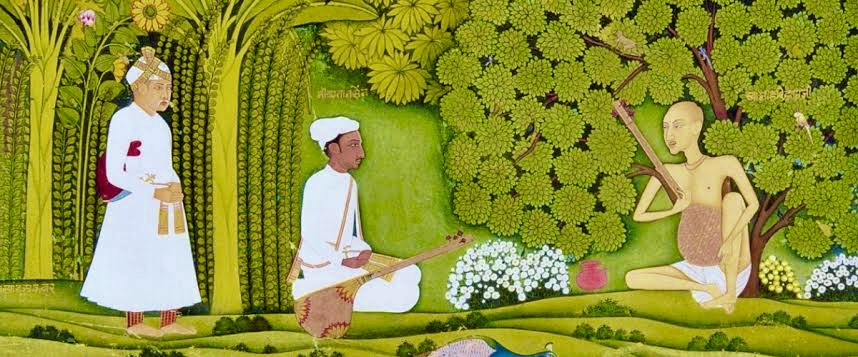
गुरु और साधक की यात्रा

The Journey of the Guru and the Disciple

गुरुपूर्णिमा विशेष लेख: मुकुंद देव साहू
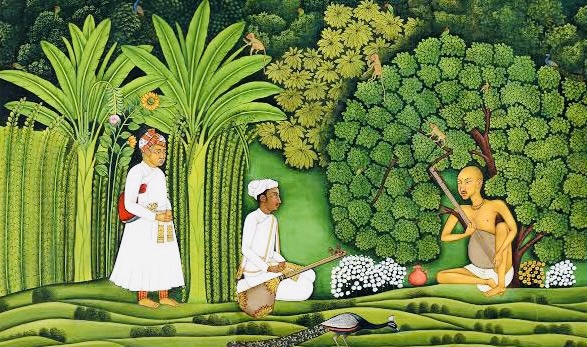
जीवन में गुरु की आवश्यकता हर किसी को होती है। यह एक शाश्वत सत्य है कि बिना गुरु के कोई भी व्यक्ति सत्पथ पर चलकर आत्मज्ञान या परम सत्य के आलोक को नहीं देख सकता।

गुरु केवल पथ प्रदर्शक नहीं होते वे स्वयं वह दीपक होते हैं, जिसकी रोशनी में साधक अपने भीतर के अंधकार को पहचानता है और उससे बाहर निकलने की यात्रा शुरू करता है।

आज के समाज में ‘ज्ञानी’ कहलाने की परिभाषा थोड़ी बदल गई है। ज्ञान का अर्थ अक्सर केवल तथ्यों और सूचनाओं का संग्रह मान लिया गया है। जो व्यक्ति उन्हें चतुराई से प्रस्तुत कर लेता है, उसे ही ‘ज्ञानी’ कहा जाता है।

पर क्या वास्तव में वह व्यक्ति ज्ञानी है? या वह केवल चतुर है?

गुरुपूर्णिमा के इस पावन अवसर पर आइए, इस भेद की थोड़ी खोज करें।

गुरुपूर्णिमा का दिन वही पुण्य तिथि है जब भगवान बुद्ध ने अपना प्रथम उपदेश धर्मचक्र प्रवर्तन पाँच शिष्यों को दिया था। यह केवल एक शिक्षण घटना नहीं थी, बल्कि आत्मज्ञान की एक वैश्विक धारा की शुरुआत थी।
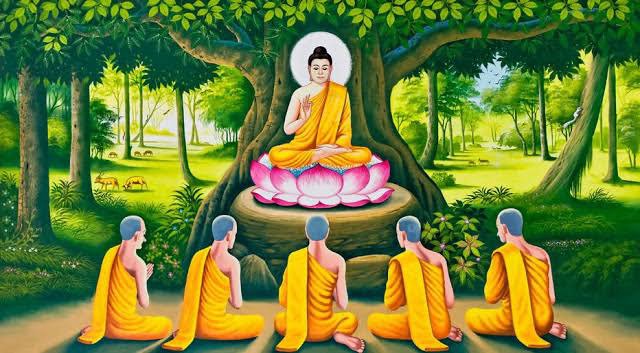
बुद्ध की एक कथा है, वे एक मुनि से बहती नदी के किनारे संवाद करते हैं।

बुद्ध पूछते हैं, “यदि कोई इस नदी के दूसरे किनारे जाना चाहे तो क्या करेगा?”

मुनि उत्तर देते हैं, “यदि जल कम हो तो वह पैदल पार कर सकता है; यदि गहरा हो, तो नाव का सहारा लेगा; और यदि तैरना आता हो तो स्वयं तैर सकता है।”

बुद्ध फिर प्रश्न करते हैं, “यदि वह न चलना चाहे, न तैरना, न नाव लेना, और यह कहे कि ‘नदी का दूसरा किनारा स्वयं चलकर मेरे पास आ जाए’ तो आप क्या कहेंगे?”

मुनि उत्तर देते हैं, “ऐसे व्यक्ति को हम मूर्ख ही कहेंगे।”

बुद्ध समझाते हैं, “जो व्यक्ति स्वयं के अज्ञान और भ्रांति को दूर नहीं करता, वह भी उसी प्रकार मुक्ति के दूसरे छोर तक नहीं पहुँच सकता। चाहे वह पूजा करे, अनुष्ठान करे, व्रत रखे या नैतिक जीवन जिए वह केवल भ्रम के साथ उसी किनारे पर खड़ा रहेगा।”

गुरु का कार्य: दिशा देना, नाव नहीं बनाना

मनुष्य को यह दुर्लभ जीवन परम सत्य की खोज के लिए मिला है। और इस सत्य तक पहुँचने के लिए गुरु की आवश्यकता अनिवार्य है। गुरु मार्ग दिखाते हैं, पर चलना तो स्वयं को ही होता है।

गुरु की दृष्टि में सभी शिष्य समान होते हैं वह न जाति देखता है, न पद, न धन, न विद्या।

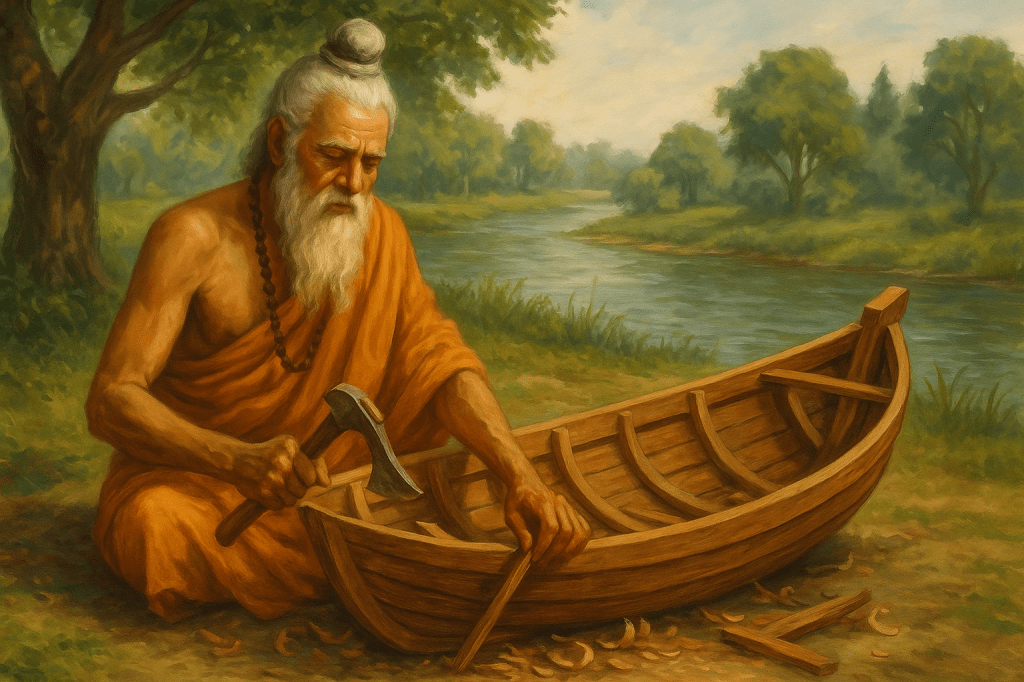
शिष्य को यह निर्णय स्वयं करना होता है कि वह उस मार्ग को कैसे पार करेगा किसी की बनाई नाव से या अपनी नाव बनाकर।यह निर्णय उसके प्रारब्ध, संकल्प, और कर्मों पर आधारित होता है।

कलाकार की दो यात्राएँ: परफ़ॉर्मर और गुरु

कलाकार दो प्रकार के हो सकते हैं, एक परफ़ॉर्मर, दूसरा गुरु।

दोनों एक ही गुरु से शिक्षा पाकर भी अलग-अलग दिशाओं में यात्रा करते हैं।

परफ़ॉर्मर अक्सर दूसरों की बनाई नाव में यात्रा करता है। उसे मंच, आयोजक, दर्शक, और प्रशंसा की आवश्यकता होती है।

वह भी किनारे तक पहुँच सकता है, पर उसका अनुभव मुख्यतः बाह्य होता है।

गुरु, अपनी नाव स्वयं बनाता है, स्वयं ही उसका नाविक बनता है।

वह अकेले उस गहरे जल को पार करता है, और जब पहुँचता है, तब दूसरों को भी मार्ग दिखाने लगता है, अपनी नाव से, अपने अनुभव से।

दोनों ही दूसरे किनारे तक पहुँच सकते हैं, लेकिन क्या दोनों की यात्रा की गहराई, भक्ति, त्याग और अनुभूति समान होती है?

क्या मुक्ति की अनुभूति सबके लिए एक जैसी होती है? यह प्रश्न आज भी हमारे भीतर उत्तर की प्रतीक्षा में है। गुरुपूर्णिमा के इस पावन अवसर पर आप सभी को मेरी ओर से हार्दिक शुभकामनाएँ। स्वस्थ रहें, साधना में रमें, और स्वयं अपना दीपक बनें।

“तमसो मा ज्योतिर्गमय।”

(अंधकार से प्रकाश की ओर चलो।)
The Importance of Discernment and Discipline in Learning Classical Music

By Mukund Dev Sahoo

Imagine giving a heart patient cancer medication, or prescribing stomach ache medicine for a dental patient! Would such an approach heal either person? We would call such a doctor ignorant, and perhaps the patient uneducated. This analogy highlights a simple truth: to heal a specific ailment, you need the appropriate treatment. Likewise, in music or any art form, an informed approach is essential. As a classical music teacher, I’ve observed this many times with my students how the knowledge I pass down from my gurus impacts them, and how they receive it. This article aims to explore this dynamic.

Just as a doctor diagnoses the problem before prescribing medication and outlines a time frame for healing, a guru assesses a student’s musical aptitude, maturity, and foundational knowledge. Based on this assessment, the guru designs the teaching process. A wise student follows the guru’s method, dedicating their energy to refining their skills. If a student is not inclined to discipline, the guru’s wisdom may not resonate with them. Much of this interaction depends on the student’s environment, atmosphere, and upbringing.

Let’s delve deeper into how this exchange works. Classical music is considered an auditory art, while dance is a visual one. Both require the practitioner to observe discipline. In auditory art, the discipline lies in knowing what to listen to and what to avoid. Similarly, in visual art, it’s about discerning what to watch and what not to. In today’s world, where screens mobile phones, in particular are everywhere, this distinction becomes crucial. Watching reels, for example, has become second nature to most people, but artists and students need to understand when it helps and when it doesn’t.

For an artist, the path of mastery involves renunciation and dedication. Most people live either in the past or the future, but an artist lives in the present and teaches society how to live in the moment. This is one of the greatest lessons of art: to fully experience and enjoy life, and to understand its meaning in real-time. Therefore, discipline is a necessary part of this journey. If one can adhere to it, they will rise above societal pressures and live a fulfilling, enriched life.

Returning to the analogy: just as a specific medicine is prescribed to cure an illness within a given time frame, in art, adhering to the time-tested guidance of a guru is crucial. As human beings, our thoughts and behaviors reflect what we constantly absorb. If we regularly engage with violent or disturbing content, it will manifest in our actions. In the same way, if we fill our minds with shallow or negative music, it will inevitably reflect in our own artistic expressions.

Recently, a friend of mine who resides abroad shared a story about his strict guru, who forbade him from listening to other artists during his training. Though it caused frustration initially, over time, he realized the value of this disciplined approach. Years later, he even wrote a popular book based on his guru’s teachings. In the past, such strictness was common, which is why the concept of “Gharana” (musical lineage) held so much importance. However, today, listening to Gharana-style singing seems like a distant dream because many have lost their sense of discipline. This is not the fault of students or teachers alone; societal changes have played a significant role.

Classical music, being an auditory art, is traditionally passed down through oral transmission what we call “Gurumukhi Vidya” (knowledge from the guru’s mouth). The purity of this form depends on faithfully following the guru’s instructions. Listening to other styles or traditions during the formative years of training may dilute the student’s own musical journey. The more one immerses in a particular tradition, the more assured their progress.

In Deva Vani Dhrupad Music tradition, there are five principles of discipline known as “Sadachaar” that guide the student toward maintaining musical purity and discovering their own unique expression. These principles are deeply embedded in the Deva Vani Dhrupad tradition, and following them ensures that a student upholds the integrity of their art while carving out a distinctive identity in today’s world.

The famous name of Tansen is well-known in the Indian classical Dhrupad Music tradition. Many singers aspire to become like him. I remember, back in 2011, when I visited my late friend Devdatt’s home near Pune, his father an avid classical music enthusiast blessed me with valuable advice. He said, “Many are trying to prove themselves as Tansen, but you, my son, strive to be a ‘Kansen’ (one who listens). Focus on listening carefully to your guru and your own voice during practice. Always be mindful of what music you expose yourself to, for it will shape your musical journey.” His words had a lasting impact on me and helped me develop a distinct musical style of my own.

Over the years, many students have come to learn from me some for a short time, some for longer. My only hope is that they gain something valuable from their training, something that impacts their lives and brings stability to their journey. In conclusion, I’d like to emphasize that art can transform your life, but only if you distance yourself from the distractions of easily accessible entertainment and instead focus on the teachings of your guru. Only then can you truly understand the depth of art and discover its beauty.

The Artist, the Audience, and the Ego: A Reflection on the Infinite Nature of Art

By Mukund Dev

In the realm of art, be it music, painting, or any form of creative expression, the distinction between the artist and the connoisseur is often blurred. The artist and the rasik (connoisseur) are not separate entities but interconnected souls in the same journey of experiencing beauty. When we begin to categorize art or artists by levels, we diminish the infinite nature of the art itself. These “levels” are merely manifestations of ego, and ego, in any form, acts as the corrosion that destroys both the artist and the art.

Consider this: no external force can destroy iron; it is the rust that forms within that leads to its decay. Similarly, it is not external criticism or challenges that damage the artist; it is the internal ego that erodes their art from within. An artist who proclaims that swar (the musical note) is divine and yet performs with the intent to exhibit personal glory, overlooks the true purpose of their craft. Art, especially music, is a gift of the divine, and it is meant to bring not individual joy but collective, universal bliss.

In classical music, for instance, when something unique or extraordinary happens spontaneously, it elevates the experience for both the artist and the listener. This spontaneity is where true joy resides. However, when an artist attempts to deliberately create something distinct for the sake of impressing others, the essence is lost. The ego, in its most unnatural form, emerges and diminishes the rasa (essence) of the art.

The difference between an authentic, natural moment in a performance and a calculated effort to stand out is profound. True mastery in art lies in surrender—allowing the divine flow to take over, where there is no room for ego, only dedication to the art and its eternal purpose.

In the end, art is not about achieving personal recognition or satisfaction but about connecting to something far greater—something that transcends the self. It is in this surrender that both the artist and the audience truly experience the infinite.

Should a music student blindly accept the words of a Satguru? Can knowledge emerge from this?

By Mukund Dev Sahoo

The most important and yet, the most difficult task is to educate someone. Transmission of knowledge between the teacher and the taught, depends on a teacher’s intellectual development and level of communication, and the receptivity of a student. In essence, an effective teacher brings out the best from within a student.

Being a music teacher for long, I am interested to share with you all, a few of my observations and thoughts. For the past several years, many students have come to me for learning. They all have one thing in common in their mind: if what they are singing is right or wrong, and why are they not able to understand? How do they make mistakes even after I tell them, how to envision the place of a shruti in the interval of swaras used in a raga? They become disturbed because of this, get upset as to why they are unable to understand all these nuances of music? Due to which many have stopped learning music. Furthermore, if Shadaj (Sa) means Shat+Aj; Shat means six and Aj means originating, i.e., the six Swaras originate from Sa itself, then why are they not realising it?

It seems to me that many of today’s music students would similarly be troubled with all these doubts! I am writing this article to address, “why do these doubts arise?” This article is to bring clarity to these doubts and how one should imbibe the best that the art forms offer, in essence, the (He)art of music.

I think it would be appropriate to share here an incident that happened to me, probably in the year 1995, when I was 7 years of age. Our family was raised in Vaishnavism and my father used to perform kirtan, walking the streets, singing the name of Krishna and playing the mridangam (Khol). Whenever he met a saint on the way, father used to invite him for a meal at home. One day father came home with a monk who was wearing saffron robe and had a coiffure on his head. When that monk saw me, he put his hand on my head and gave me a photo in my hand which had a picture of a saint. The monk also gave a mantra to chant and said, “Whenever you have any problem in life, remember him, close your eyes and take his name, all your problems will go away.” After that day, this mantra was included in my Sandhya Aarti which consisted of – Gayatri Mantra, Mahamrityunjaya Mantra, Sandhya Mantra, Navagraha Mantra; at the end of chanting all these mantras, I used to chant the mantra which the monk gave. I didn’t know who this saint was, what he did, or where he was from, I didn’t know anything about the saint in the photo. Yet, I just chanted his name in the mantra everyday as was instructed to me by the monk.

In 2018, my Guruji Padmashree Gundecha Bandhu’s father, Late Shri Chandmal Gundecha Ji, from whom I learned many important things in life, was reading a book at his home. I used to go to Guru ji’s house every day, that day also when I went there, seeing the book Babu ji was reading, I asked him, “What is that book you are reading?” He said, “This is the book of Saint Mahatmas.” “Please can I see it?” I asked. Babu ji said, “Do you want to see or read, tell me?” “I want to read this book after seeing it” I said. Then he gave me that book. When I opened the book, I saw that the same photo which was given to me by the monk in 1995 was inside this book and the whole journey of the saint’s life was written there. When I saw all this in the book, I was surprised that the saint, whose name I was chanting for so many years, though I never showed any desire to know about him; yet he came in front of me and told me who he was!

I have a deep feeling that we may not understand some of the things that Sat Guru (Master, Saint) says now, but if we practise what is said every day, even if it is without understanding, when the time comes, the same thing will be understood. I do not mean to say that you must do things without understanding; if you are able to understand, then that is good; you should try your best to understand. However, if you do not understand, there is no problem in that, just keep doing the Sadhana. It will reflect and dawn in your understanding when the right time comes. Perhaps this birth may also fall short of this understanding, just as following evening is night, and as the sun rises it is morning; this cycle of nature is not dependent on anyone, it is rotating freely in time. If you go to the temple in the dark of the night and pray for morning to dawn in the middle of the night, then even God will call you mad. Similarly, true knowledge automatically dawns, moving in the cycle of time. That knowledge will surely be a payoff when you are ready and have matured. Do not expect that knowledge would just happen because of a sadhna; even if you feel that you are getting peace of mind (& soul) by the music sadhna, then just keep doing the sadhna and keep walking on this path.

I could not understand many things that we learned from Guruji Padmashree Gundecha Bandhu ji then; only now slowly I’m understanding and realising what he wanted to convey. We are all familiar with the fact that music is Gandharva kala. But what is the meaning of Gandharva? The art which brings the sense of infinity, which can take one to samadhi and whose practice opens the door to salvation, is Gandharva art. Cultivation of such an art is not in everyone’s destiny; if you are joining this practice, then you must have done very good deeds by which you are getting familiar with the heart of this art. Keep with music sadhana, treading the path constantly, continuously and in full receptivity to what is taught! All that is to be understood will reveal itself with readiness of the mind!

For any query please contact: E-mail dhrupadmusicfoundation@gmail.com http://www.mukunddev.com http://www.dhrupadmusicfoundation.com