Should a music student blindly accept the words of a Satguru? Can knowledge emerge from this?

By Mukund Dev Sahoo

The most important and yet, the most difficult task is to educate someone. Transmission of knowledge between the teacher and the taught, depends on a teacher’s intellectual development and level of communication, and the receptivity of a student. In essence, an effective teacher brings out the best from within a student.

Being a music teacher for long, I am interested to share with you all, a few of my observations and thoughts. For the past several years, many students have come to me for learning. They all have one thing in common in their mind: if what they are singing is right or wrong, and why are they not able to understand? How do they make mistakes even after I tell them, how to envision the place of a shruti in the interval of swaras used in a raga? They become disturbed because of this, get upset as to why they are unable to understand all these nuances of music? Due to which many have stopped learning music. Furthermore, if Shadaj (Sa) means Shat+Aj; Shat means six and Aj means originating, i.e., the six Swaras originate from Sa itself, then why are they not realising it?

It seems to me that many of today’s music students would similarly be troubled with all these doubts! I am writing this article to address, “why do these doubts arise?” This article is to bring clarity to these doubts and how one should imbibe the best that the art forms offer, in essence, the (He)art of music.

I think it would be appropriate to share here an incident that happened to me, probably in the year 1995, when I was 7 years of age. Our family was raised in Vaishnavism and my father used to perform kirtan, walking the streets, singing the name of Krishna and playing the mridangam (Khol). Whenever he met a saint on the way, father used to invite him for a meal at home. One day father came home with a monk who was wearing saffron robe and had a coiffure on his head. When that monk saw me, he put his hand on my head and gave me a photo in my hand which had a picture of a saint. The monk also gave a mantra to chant and said, “Whenever you have any problem in life, remember him, close your eyes and take his name, all your problems will go away.” After that day, this mantra was included in my Sandhya Aarti which consisted of – Gayatri Mantra, Mahamrityunjaya Mantra, Sandhya Mantra, Navagraha Mantra; at the end of chanting all these mantras, I used to chant the mantra which the monk gave. I didn’t know who this saint was, what he did, or where he was from, I didn’t know anything about the saint in the photo. Yet, I just chanted his name in the mantra everyday as was instructed to me by the monk.

In 2018, my Guruji Padmashree Gundecha Bandhu’s father, Late Shri Chandmal Gundecha Ji, from whom I learned many important things in life, was reading a book at his home. I used to go to Guru ji’s house every day, that day also when I went there, seeing the book Babu ji was reading, I asked him, “What is that book you are reading?” He said, “This is the book of Saint Mahatmas.” “Please can I see it?” I asked. Babu ji said, “Do you want to see or read, tell me?” “I want to read this book after seeing it” I said. Then he gave me that book. When I opened the book, I saw that the same photo which was given to me by the monk in 1995 was inside this book and the whole journey of the saint’s life was written there. When I saw all this in the book, I was surprised that the saint, whose name I was chanting for so many years, though I never showed any desire to know about him; yet he came in front of me and told me who he was!

I have a deep feeling that we may not understand some of the things that Sat Guru (Master, Saint) says now, but if we practise what is said every day, even if it is without understanding, when the time comes, the same thing will be understood. I do not mean to say that you must do things without understanding; if you are able to understand, then that is good; you should try your best to understand. However, if you do not understand, there is no problem in that, just keep doing the Sadhana. It will reflect and dawn in your understanding when the right time comes. Perhaps this birth may also fall short of this understanding, just as following evening is night, and as the sun rises it is morning; this cycle of nature is not dependent on anyone, it is rotating freely in time. If you go to the temple in the dark of the night and pray for morning to dawn in the middle of the night, then even God will call you mad. Similarly, true knowledge automatically dawns, moving in the cycle of time. That knowledge will surely be a payoff when you are ready and have matured. Do not expect that knowledge would just happen because of a sadhna; even if you feel that you are getting peace of mind (& soul) by the music sadhna, then just keep doing the sadhna and keep walking on this path.

I could not understand many things that we learned from Guruji Padmashree Gundecha Bandhu ji then; only now slowly I’m understanding and realising what he wanted to convey. We are all familiar with the fact that music is Gandharva kala. But what is the meaning of Gandharva? The art which brings the sense of infinity, which can take one to samadhi and whose practice opens the door to salvation, is Gandharva art. Cultivation of such an art is not in everyone’s destiny; if you are joining this practice, then you must have done very good deeds by which you are getting familiar with the heart of this art. Keep with music sadhana, treading the path constantly, continuously and in full receptivity to what is taught! All that is to be understood will reveal itself with readiness of the mind!

For any query please contact: E-mail dhrupadmusicfoundation@gmail.com http://www.mukunddev.com http://www.dhrupadmusicfoundation.com
The condition of classical music and musicians in Odisha is appalling.


The demise of Pandit Umesh Chandra Kar has filled my heart with immense pain. Pandit ji is a very famous name in the history of Tabla of Odisha. He is probably not known to many people in India because he is from Odisha. This is not due to limitations of other states, it is because of the limitations of Odisha’s musical environment; odisa’s political scene was unable to recognize his art and artistic talents. Panditji could definitely have been recommended for the Padma award or any other national award, if not for Odisha’s political scene. If he hailed from any other states of India, his name would have been nominated for Padma award and would have been given a chance to present his art in every major program held at the government level in India. The music world of Orissa has not learned to promote anything other than Odissi music and Odissi dance and appreciate any artist or their art. It is not that artists are not being prepared in Odisha, every year hundreds of students pass out from Utkal Sangeet Mahavidyalaya and Utkal University of Culture, but where do all these artists go? There is very little appreciation of art here so where do these art students go? What do they do? There is no trace of them in the field of art.

Today again a great personality who created many disciples in Odisha music history disappeared into the sky, not much known to the outside, even within india. One of my disciples went to him just a few days ago. When he said that he is learning Dhrupad, Pandit ji said that this Dhrupad music is the root of all music, I am very happy you are learning it. Then Pandit ji said to the student,
“I have played my tabla with so many great personalities, I’m requesting you tell all this to the government so that they can give way to my art.” When that student came and told me this, I was very distressed. You can guess from this how much pain and suffering he was in, in his last stage of life.

Pandit Ji belongs to a strong musical family, his father Pandit Khetramohan Kar was a well-known tabla player and many artists of India used to visit his house in Puri. Even after belonging to such a strong musical family, his sorrow and pain was immense as he was born in Odisha. This experience of my 12 years living outside Odisha to learn music says that if he had lived in cities like Kolkata, Pune, Mumbai, Delhi, Punjab etc he might not have had to face this pain and suffering. Great artistes like Vidushi Sunanda Patnaik had moved to Kolkata because of such indicative musical atmosphere of Orissa.

I heartily request all the music gurus, music critics, music lovers and politicians of Odisha to designate a road in his name to keep Panditji’s memory alive and place Pandit Umesh Chandra Kar statue in that road. This cannot complete the irreparable loss in classical music, but if this is done, then Pandit ji’s soul can definitely find peace, I believe.

Mukunda Dev Sahoo

Dhrupad exponent, (Disciple of Padma Shri Gundecha Brothers) Poet, Writter & Composer

गम

न जाने ये कैसा ग़म है,
सबकुछ रहते हुए भी
कुछ तो कम है,
बहुत कुछ में
जीवन बंट गया है,
यही अहसास ही
मन में हर-दम है।।
न जाने ये कैसा ग़म है….

कल समय की सीमाएं बहुत थी,
आज उसकी अवधि
मेरे उमर के लिए कम है,
गवाया हुआ समय को
याद रखा है,
पर,
उस समय के किरदार
आज गुमनाम है।।
न जाने ये कैसा ग़म है…..


Don’t know what kind of sorrow this is, despite being everything,
there is something less.
Life is divided into many things,
this is the feeling that it is always in the mind.
Don’t know what kind of sorrow this is……

Yesterday there was a lot of time limit
but today its duration is short for my age.
Has also remembered the time gone by but the character is anonymous today.
Don’t know what kind of sorrow this is……

Mukund Dev, Dhrupad Singer, Composer, Lyricist,Writer & Poet

http://www.mukunddev.com

Significance of age for music education:

By Mukund Dev Sahoo

I started teaching music in 2008 and today it’s going to be almost 14 years. In this long journey many disciples came to me with the desire to learn music. Some of them learnt for a short interval and some of them for a long time. I have done analytical study of many of my disciples and tried to clarify their doubts in accordance with our traditional musical heritage. Sometimes the questions of my disciples kept me silent for 40 days just in search of the right answer. I have been fortunate enough to have disciples from a varied age group right from very young to old. All have great interest and desire for music. This has inspired me to utilise my best capacity and interest to impart musical knowledge and skills I have, irrespective of the age of disciple. My this long journey as a teacher made me notice many aspects of learning music. Today’s article is based on one of such an important aspect : What should be the age to learn music. Lets ponder over this subject

Can 40 to 80 year olds learn music?

             I have met many disciples whose ages are more than 40 and less than 80. Their question is, Will it be possible to learn music at this age being in a much later stage of life. They also have self doubt whether they will be able to learn music so late in life and will it really benefit them. They feel that people younger than them can learn and sing much better so they always repent why we didn’t start learning in childhood. They also feel that some people have the God-gift of a great voice and understanding of music by birth which we don’t have. These thoughts develop into an inferiority complex thereby reducing  the melody in their music and gives a glimpse of despair. Today this article is for people who consider age plays an important role in learning music. 

Music is the highest art and to those who understand, is the highest worship.

~Swami Vivekananda

What would you say about this quote of Swami Vivekananda, the great saint of Indian spiritual philosophy? According to him music is the highest worship which opens the path leading to divine experience of God. Is there any age limit to experience the power of God? Is there any specified time to worship the Lord? If we believe that God is the creator of creation, then is there any age specified for worshiping him? If God is the creator of our cycle of birth and death, then music is an excellent medium to reach Him. 

God is there but He is not seen, He has no form, no color, no caste and no religion, He can only be felt. Swara is God’s entity which has no form  colour, caste, or religion. So its divinity, purity can only be felt. Therefore music is the highest worship for experiencing God, the supreme energy in the universe 

Here comes another question: Those who sing better than us, are their good voices a gift from the same God?

          Here I would like to give a small example which is based on the ultimate truth of nature. We all know about the water cycle. Black clouds come in the sky, then they fall as rain, then the same rain goes into the sky by evaporation due to sunlight and forms clouds filled by water. This cycle is continuing since creation has happened. If any one factor in this cycle is missing then the cycle will break and there will not be any rain. In the same way, we are also moving in a natural cycle of birth and death. Our each and every action will have consequences. Depending on the quality and nature of our action the result will come. This is the irrefutable rule of creation. If today someone is singing better than us, then it’s the result  of his own efforts, if not in this birth then maybe in his earlier births. Somewhere his destiny in the cycle of birth and death is playing a role here. Somewhere in his previous life he must have learned music, must have done music practice, so he is singing well today. So if you start comparing yourself with such good singers you will start feeling inferior or jealous. Such negative thoughts will take you away from your cycle of music. 

            If you want to live in this cycle of music and get ultimate bliss from it  then you first understand how this music cycle works and where does it begin. First of all, having a strong desire to learn music, then taking refuge in the shelter of true Sat Guru, learning with full devotion and then practicing music till the last breath. Following this cycle irrespective of your age and without comparison with anyone will take you to ultimate bliss of music which is nothing but experiencing divinity of God

At what age do young children start music education?

              During my journey as a teacher I have come across many parents who ask if their children in age group of 4 to 8 years can learn classical music? Will they understand? 

To all these parents I wish to explain that children in this young age are soft hearted, pure, impressionable and easy to mould. Classical music is a sacrament which purifies speech, brings sensitivity, reinforces love, kindness, generosity.  Children hearts are pure like the swaras in ragas. They’re curious and have high grasping power and can pick up music easily. Swara and Raga practice keeps them connected with the reality of life. So this is the best age to sow the seed of music in their soft hearts which is like fertile soil. 

I have also seen parents who want their children to learn fast and start singing songs in a short time and gain appreciation by entertainment. They are in a hurry to get good results and have no patience.  I would like to give an example of Gardener to all those parents. 

Gardener never thinks of fruit when he sows seed. He sees to it that soil is fertile and well maintained. Then carefully he sows seed. Create a suitable environment so that seed fertilises and then nurtures it by watering it regularly. Then as time passes seed grows in sapling. Its roots go deep down soil to absorb food and water and slowly gains strength to grow in fully grown trees. After years of care and efforts it finally blossoms to give flowers and then bears sweet fruit. This needs a lot of patience and care. 

So parents should encourage children at a young age to learn classical music, find the right Guru to educate and guide them on this divine path. They should create the right atmosphere for them to learn and progress. Motivate them to practise and take efforts. Then after giving them full attention and care they should wait patiently for this sapling to grow in a fully blossomed tree. Over years they will be overjoyed to see how the tree beers sweet fruit. When their musical knowledge matures then your kids will be lit up by this musical light and their singing will lit up the whole world. Don’t deprive them of their education in your limited entertainment. You need to change your thinking and have a broader perspective. 

Also i can assure if your children  get these musical rites in right way then they can develop in a good natured human being. Your children will be sensitive, compassionate and loving towards you till end of your life by the knowledge and values this classical music will give them. In today’s society we see the downfall of our traditional values. The parents who worked hard throughout  their life to give good life for their children are mistreated by children in their old age. Some are left in old age homes to fend for themselves. I’m sure that learning classical music and going through the process from a young age will imbibe good values in the minds of the children. It’s very important to sow the right seed in the minds of children. Neem seed will not give sweet fruit. What you sow shall you reap.

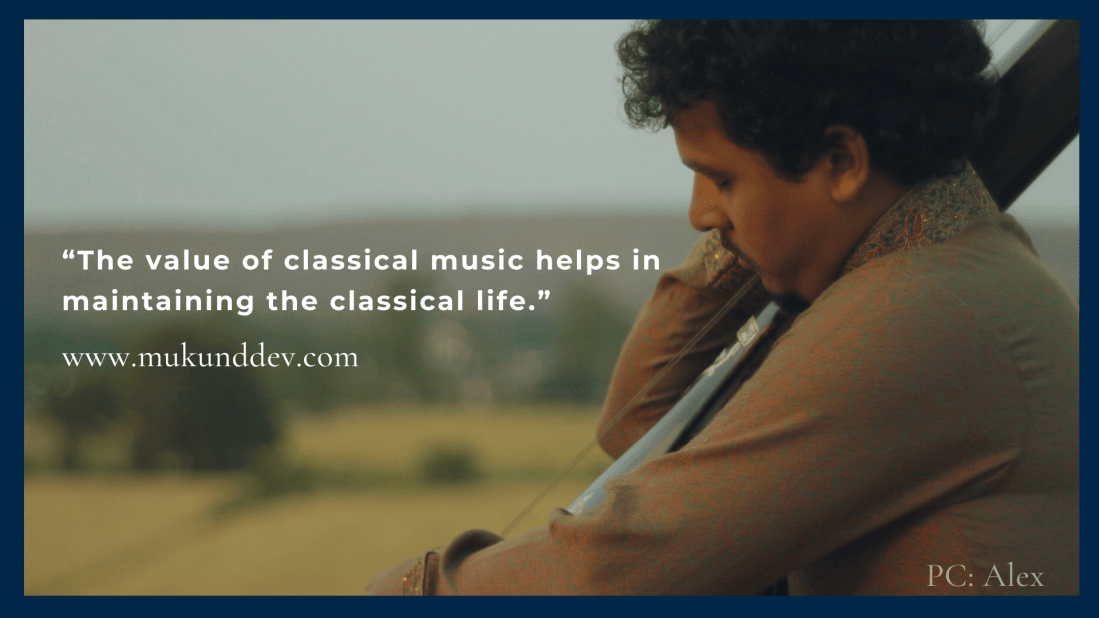
               For the last 4 years I have been doing a program named “Little Dhrupad Singers” This is the program for kids from 4 to 15 years of age group who give their performance by singing most ancient classical music form of India called Dhrupad. I have practically experienced for the last 4 years that children can understand classical music better than adults because their mind is open and not conditioned. I have come across some parents who have their minds conditioned with preconceived notions. This leads to their children losing interest in music. The path of learning classical music is not easy. It can become repetitive sometimes and it also needs lots of effort to overcome obstacles in the way. Due to this some children lose interest. In such circumstances it is the duty of parents to encourage them. The right Guru also understands the condition and motivates children to continue.. “The value of classical music helps in maintaining the classical life.” So it is extremely important for parents to understand this in first place. Every parent should teach everything to their children, and they should also learn from their children because “Every child is an artist, their art teaches the way of living life.”

I believe there is no specified age to learn music. However if you want to pursue learning classical music as a professional career and medium of earning your living then you have to start learning music from childhood and on right path.I also believe that if disciple  can devote 4 years of his life to music practice with full dedication, then he can become a good musician professionally. 

To conclude I will say that whatever may be your age and situation age you are now and whatever the situation, if you do music meditation, then you can achieve ultimate bliss. Our Indian music is an important instrument in paving the path of ultimate truth and divinity. Hence in our Indian tradition music is rightly called as NAAD BRAHMA. BBY

Mukund Dev
Dhrupad exponent, Composer, Poet and Writer.

http://www.dhrupadmusicfoundation.com http://www.mukunddev.com

Jealousy, Hatred, Anger and Sadhana

Hatred:

It was in 2002, when I started learning music properly, there was a music competition in Math(Ashram) near our house in Chandneshwar. Both my brothers gave me a lot of enthusiasm to participate in this competition and I also agreed. For the first time in my life, I was participating in the competition and When I got on the stage, I started trembling with fear and for the first time I started holding the mike in my hand, then my hand started trembling, throat started trembling and when I started singing, when it ended, I didn’t know anything. After the end of my singing, I could hear that one or two people were compulsively clapping! Came back home very sad that night and I banged my head on the harmonium and started talking with him. The next morning an incident happened due to which I am able to feel the depths of music today. Supply water used to come right in front of our house and the whole village used to gather there to fill that supply water, the next morning all the villages had reached there to fill water And started talking about my singing last night, among all those people a man named Bapi da was mocking me and making fun of me in front of everyone, Bapi was showing everyone in a dramatic way like I was trembling while singing! I was watching and listening to all this sitting in my house, tears were flowing from my eyes and there was a lot of hatred on Bapi, I used to meet with him almost every day in the village and whenever I saw him, I was filled with hatred and I had made sure in my heart that I should show him one day by singing a song. Today that hatred has turned into gratitude. I express my gratitude to him from the bottom of my heart. If he had not insulted me that day, perhaps I would not have understood the infinite ocean of Music.

This story of mine is said because while doing music, many people will meet who will applaud, they will speak good but those who speak bad should be given gratitude because the same people want your well-being. The feeling of hatred for the people who call you bad will come in the initial stage, it is necessary to save it, if you express it, then the energies of your sadhana will be reduced.

Anger:


I had taken admission in Mumbai University in 2011-12 to do M.Mus and stayed in JS Hall Hostel in Churchgate, Mumbai. I made a lot of friends in the music department of the university. Jazim Sharma is one of those friends, who is famous today in the name of well-known Ghazal Singers across the world. Jazim used to live in a separate room in the hostel but whenever I am sitting to do my Sadhana, he used to come to my room and snatch the harmonium from me and start singing his ghazals and also ask me to sing as well But the technique of ghazal did not come down in my throat, still I used to try and jazim taunting me, Tere Se Ghazal Nahi Banega always used to speak. Whenever he used to say this, I used to get very angry with him. I used to stop my classical music practice and try singing ghazals just to show him But despite my best efforts, the ghazal was not sung till the very end And I used to get very sad about this. Some friends and I used to wrestle every evening in the style of WWE!! For that wrestling I used to get alone and Jazim on the other side and some friends. Our hard-hitting friend Late Devdutt Kulkarni used to play the role of referee. This wrestling was the only opportunity that used to cool my anger on Jazim!
I told this story of mine here because I have seen that if our aim in sadhana is not very strong then we can get influenced by anyone who can destroy, corrupt our sadhana and we go astray. We should follow the music of our soul, not try to connect our path with the rhythm of others. Like I did during my M.Mus, Ghazal was not my subject, Classical Music was the subject on which I had to stick, but due to ignorance, I lost my purpose. The subject which is not ours, by listening to someone, seeing or being influenced by someone’s words, when we try to study on that subject, then two things can happen, one we can do that thing well, otherwise because of not being proficient on that subject, we keep on burning with anger or we can get frustrated.

Jealousy:


“Jealousy is never a sign of purity, it only burns those who are jealous to ashes.”

In 2005/6, when I had enrolled in Utkal Sangeet Mahavidyalaya Bhubaneswar, my aim was absolutely sure. For the whole 5 years, I woke up every day at 4:00 am and continued to do my spiritual practice which is the sanskar of my late father. Seeing my waking up in the morning, some of my friends used to try to get up at 4:00 am to do sadhna and they used to sit beside me and used to play harmonium on a different scale but I didn’t get any effect from them. When all of them used to do this, my attention became more firm, I used to try to listen to my voices more carefully. Their jealousy was helpful in my sadhana because my aim was only in doing sadhna, just like a thirsty person needs water. I got the opportunity to stay in the shelter of great gurus in my musical journey, I have seen many disciples of those gurus having strong jealousy from each other. If a disciple of a guru is doing a very good job, then only the disciples of the same guru get burnt by the fire of jealousy, we have also seen this. Jealousy is never a sign of purity, it only burns those who are jealous to ashes.

We should also keep in mind that music is not tied to any other person, music is free like the sky, music binds everyone with one sound, music is the father of all individuals and creation. In the initial practice stage of music, one can be centered, but as you sink into the continuum of cultivation, the music will shine like a ray of sunshine.

Naad Yoga and Characteristics of a Naad Yogi

By Mukund Dev Sahoo, Dhrupad exponent & Founder Dhrupad Music Foundation

“ॐ कार नाद सकल शक्ति, नाद-योग साध होवे मुक्ति..| नाद-श्रुति-स्वर साधु साधे, देव-नर-नारी सकल शांति”||

The essence of the entire creation is intricately woven with an underlying vibration, resonating as the sacred sound of ‘Omkar,’ often referred to as ‘Naad Brahma’ in ancient scriptures. This divine resonance, when explored through the practice of Naad Yoga, unveils the profound connection between oneself and the universal vibration, offering a transformative experience of inner harmony and liberation.

Through the pursuit of Naad Yoga, individuals can traverse the realms of ‘Naad,’ encompassing the melodic nuances of ‘Shruti’ and the harmonious expressions of ‘Swar.’ This sacred journey leads practitioners, be they divine, human, or feminine, towards a state of complete tranquility and peace. It is a journey that encapsulates the spiritual essence of the self and the cosmos, resonating with the harmonious balance found in the divine and human aspects of existence.


“नादोपयोगित्वा न्मानुषण देहमुच्यते” ||१७||

~Pandit Sarangadev

In the 13th century, Pandit Sarangdev, the esteemed musicologist, articulated in the chapter on the order of creation in Sangeet Ratnakar that the human body, within this vast creation, possesses the unique ability to experience every fluctuation of frequency and transform it into music. Our bodies are bestowed upon us to perceive the Naad Brahma, the divine and sacred sounds.

This body, crafted from the Pancha Bhoota (five elements of nature), embodies an inherent instability in vibration. When we endeavor to engage with these fluctuating vibrations with serenity, we can sense the essence of life’s energy within us. Witnessing the form of life energy within our soul opens the gateway to liberation, freeing us from all sorrow and pain. The merging with the infinite vibration is termed Nada Yoga.

If the aim of sadhana is to explore the energies of life and tread the path of liberation, the foremost step is to seek a Satguru well-versed in the authentic methods of Naad Yoga, leading a yogic way of life. Despite the abundance of musicians in Indian classical music, it is crucial to discern who truly embodies the role of a Satguru. Unfortunately, contemporary examples highlight instances where individuals who engage in violent activities teach Nada Yoga. Such practitioners can only impart teachings that forcefully grapple with the essence of pure sound.

In essence, a genuine Naad Yogi or Satguru is one who remains detached from all worldly pleasures. Here, I would like to highlight some significant characteristics of a Satguru or Naad Yogi.


Characteristics of a Naad Yogi:

1. Those who walk well on the path of religion and have complete knowledge of the ultimate truth of religion.

2. One who is completely free from lust, anger, greed and violence.

3. One who is completely restrained in speech, action and self-righteousness.

4. One who sees only God in music practice, aspires to experience God.

5. One who sees everyone with equanimity, beyond falsehood, deceit and shows the path of knowledge with equal respect.

6. One who does not have enmity with anyone and does not criticize anyone and who never talks in vain.

7. Whose mind is completely calm, never becomes promiscuous, no matter how difficult times may be.

8. Those who have loving kindness, get along with everyone with humility and gratitude.

9. Those who are in Samadhi in the sound of Pure-Naad, And have a good knowledge of the variations and variability of frequencies.

10. One who is only interested in Naad sadhna beyond honor, respect etc.

11. One who grants mercy, forgiveness and best wishes for every creature of nature.

12. One who knows very well the way to enter wisdom from Samadhi through Naad Yoga.

13. One who is completely restrained from diet, sleep and sex.

14. A True master (Sadguru) is one who respects every devotee and disciple as his son or daughter, father or mother.

15. One who experiences divine power from every particle of the sound of nature and worships Naad Brahma with unwavering devotion, love and faith.

In our contemporary society, we all seek a guide who can illuminate the path of righteousness, leading us to experience the divine amidst life’s journey. Often, we encounter individuals who, with sweet words, try to bring us joy, and we may inadvertently accept them as spiritual guides. If you aspire to explore the profound power of music, it’s crucial to remain vigilant and discerning. Look for these characteristics in a Sadguru, then embrace them as your mentor. Through dedicated practice, devotion, unwavering faith, and humble gratitude toward the Guru, your life’s journey will unfold with happiness and prosperity.

If the objective of your spiritual practice is to tap into the life energies and embark on the path of liberation, it is imperative to find a Satguru well-versed in the authentic methods of Naad Yoga, living a life akin to that of a yogi. Despite the abundance of musicians in Indian classical music, it is essential to discern who truly embodies the role of a Satguru. Regrettably, there are instances where individuals engaged in violent activities teach Nada Yoga. Such practitioners can only impart teachings that grapple violently with the essence of pure sound.

In essence, a genuine Naad Yogi or Satguru is one who remains detached from all worldly pleasures. Here are some essential characteristics to help you identify a Satguru or Naad Yogi accurately.

~Mukund Dev, Dhrupad exponent, Composer, Lyricist, Writer & Poet

http://www.mukunddev.com / http://www.dhruoadmusicfoundation.com

ମୃତ୍ଯୁର ବସ୍ତ୍ରରେ… (Clothed in death)

By Mukund Dev Sahoo

ମୃତ୍ଯୁର ବସ୍ତ୍ରରେ ଜନ୍ମିତ ମୁଁ
ଜନ୍ମଠୁ ଭ୍ରମରେ ଭ୍ରମିତ ମୁଁ,
କେହି ମୋତେ ଏଠି ଜାବୁଡ଼ି ଧରିନି
ପର ସାଥେ ନିଜ ସତ୍ତାଟେ ମୁଁ,
ମୃତ୍ୟୁର ବସ୍ତ୍ରରେ…..।।

ସମ୍ବେଦନା ନାହିଁ
ଏଠି କାହା ପାଈଁ
ବିବାଦିତ ଅହଂ କର୍ତାଟେ ମୁଁ,
ମୁଁ ଠାରୁ ମୁଁ ଅଲଗା ହୋଇନି
ଲାଂଛିତ ହେଲେବି ରଞ୍ଜିତ ମୁଁ..
ମୃତ୍ୟୁର ବସ୍ତ୍ରରେ…..।।

ବସ୍ତୁ ଠାରୁ ବ୍ୟକ୍ତି ମହଙ୍ଗା ଲାଗୁଛି
ବ୍ୟକ୍ତିତ୍ୱ ସତ୍ତାରେ ଅନ୍ଧଟେ ମୁଁ,
ନିଜ କଥା କେବେ ନିଜେ ବୁଝି ନାହିଁ
ପର ସଂସ୍କାରର ଆକାର ମୁଁ…
ମୃତ୍ୟୁର ବସ୍ତ୍ରରେ…..।।

ମରଣ ଯନ୍ତ୍ରଣା ଦେଖିବି ଅଦେଖା
ଅନ୍ତର ନେତ୍ରଠୁଁ ବାହାରେ ମୁଁ,
ମୋର ଏ ଜୀବନ ମର ହୋଇଯିବ
ମୁଁ ସତ୍ତା ନେଇ ଜନ୍ମିବି ମୁଁ,
ମୃତ୍ୟୁର ବସ୍ତ୍ରରେ….।।

“I” am born in the clothes of death
That “I” has been in illusion since birth
No one is holding “me”
There is a doer “I” with others.

Really don’t have sympathy for whom,
The “I” matters in the dispute,
I am not different from “I”,
“I” is colored even after slander.

The person looks more expensive than the things,
The “I” is blinded by the power of personality,
I never understood “I”
“I” is the shape of others’ cultivation.

Ignored even after seeing the agony of death,
The “I” is out of the inner eye,
This life of “I” will become dead,
“I” will be born again from the power of “I”.

http://www.mukunddev.com

http://www.dhrupadmusicfoundation.com